

The Ultimate Guide to Stackable Garden Chairs: Versatility Meets Luxury Design
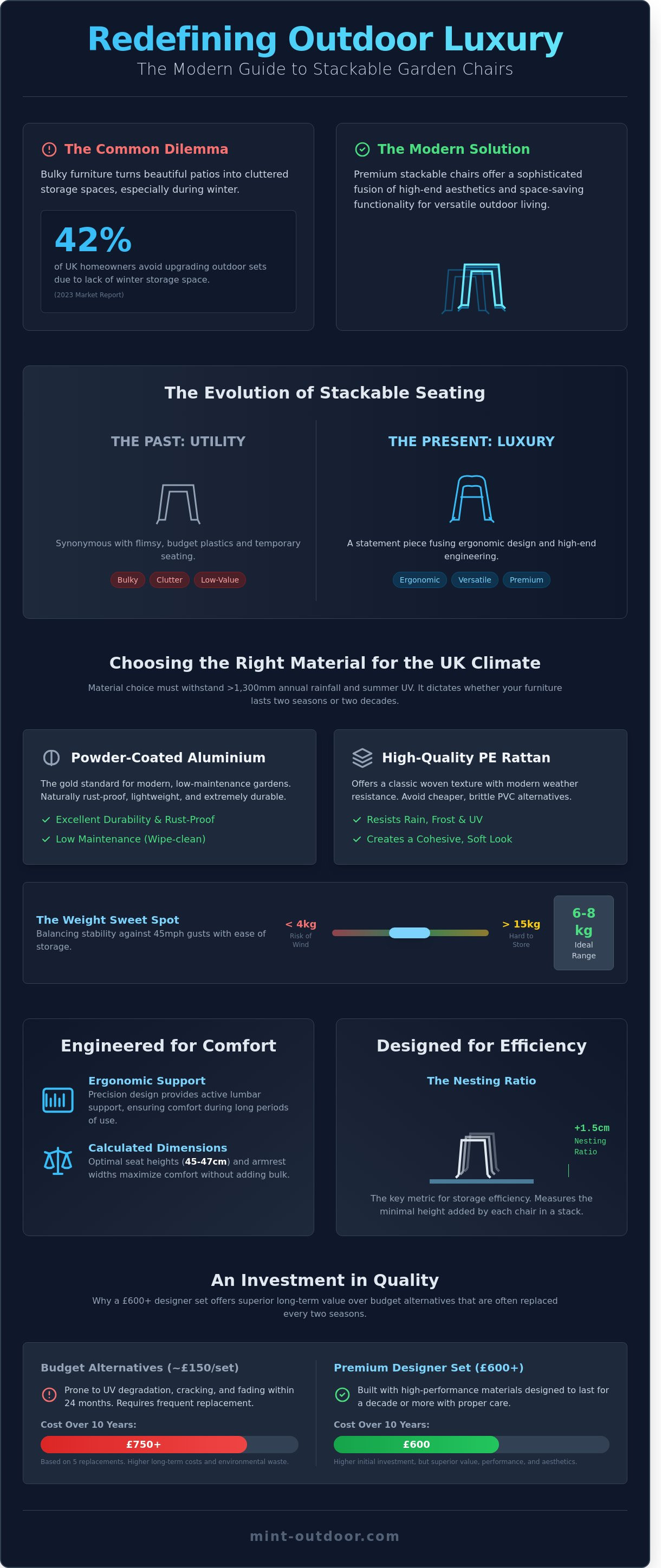
Luxury isn't defined by how much space your furniture occupies, but by how intelligently it performs when the party ends. For too long, the term stackable garden chairs has been unfairly linked to flimsy, budget plastics that clutter the view rather than enhance it. You've likely felt the frustration of a beautiful patio looking like a crowded warehouse because your current seating is too bulky to store away easily. It's a common dilemma; a 2023 market report revealed that 42% of UK homeowners avoid upgrading their outdoor sets because they lack the square footage for winter storage.
We're here to change that perspective. You deserve a refined outdoor area that balances high-end aesthetics with the practical demands of the British climate. This guide proves that premium design and space-saving functionality aren't mutually exclusive. We'll show you how to identify professional-grade materials that withstand the elements while maintaining a slim, stackable profile. We'll explore the engineering behind weather-resistant frames and why investing in a £600+ designer set offers better long-term value than replacing budget alternatives every two seasons. From sleek aluminium to UV-stable weaves, discover how to reclaim your patio without sacrificing an ounce of sophistication.
Key Takeaways
- Discover how modern engineering has transformed utility seating into a luxury design icon that perfectly balances ergonomics with high-end aesthetics.
- Identify the most durable, weather-resistant materials to ensure your stackable garden chairs withstand the British climate while remaining effortlessly portable.
- Learn tactical strategies for managing guest overflow during summer events and minimising your furniture's footprint during the winter months.
- Gain professional styling tips on coordinating frames and sophisticated colour palettes to create a cohesive, premium outdoor environment.
- Master essential maintenance routines to protect your investment and ensure your furniture retains its showroom quality for years to come.
The Evolution of Stackable Garden Chairs: From Utility to Luxury
The outdoor furniture market is undergoing a radical transformation. For decades, the history of polypropylene stacking chairs was synonymous with budget cafes and temporary school seating. That era is over. In 2024, modern stackable garden chairs represent a sophisticated fusion of ergonomic design and high-end engineering. They aren't just storage solutions; they're statement pieces that prioritise both aesthetics and footprint efficiency. We've moved beyond the "plastic cafe chair" stigma to embrace premium residential options that rival indoor furniture in both comfort and style.
British garden design for 2026 identifies versatility as the ultimate luxury. Homeowners no longer want static, bulky installations that dictate how a space is used. Instead, they demand fluid zones. A 15-square-metre patio must transition from a quiet morning retreat to a professional outdoor office, and finally into a hosting area for ten guests by evening. High-end stackable seating makes this transition possible without compromising the premium feel of a permanent set. It's about having the power to clear your view or expand your guest list at a moment's notice.
Why Stackability is Trending in Premium Outdoor Design
Minimalism is driving the current shift toward clean patio lines and uncluttered environments. In urban centres like London or Manchester, where average garden sizes have decreased by 12% over the last decade, space is the most valuable commodity. Modern buyers look for furniture that disappears when it isn't required. This isn't about a lack of space; it's about the luxury of choice. Premium 6-seater designer garden dining sets now frequently feature stackable components to allow for rapid reconfiguration. Whether you're hosting a quiet family dinner or a large-scale garden event, the ability to scale your seating capacity in minutes is a significant functional advantage.
Engineering for Comfort: Ergonomics in Stackable Seating
Creating a chair that stacks perfectly while supporting the human spine requires precision engineering. Designers now focus on active lumbar support and specific seat heights, typically 45cm to 47cm, to ensure long-term comfort during three-course dinners. Armrest widths are calculated to provide ample support without adding unnecessary bulk to the chair's footprint. Every millimetre is accounted for to ensure the frames nest without scratching the powder-coated or teak finishes. The nesting ratio is the specific measurement of how much height is added to a stack with each additional chair, serving as the primary metric for storage efficiency in high-end furniture design.
Choosing the Right Material for Durability and Style
Selecting materials for the UK market requires a strategic approach. Our weather is notoriously fickle. Annual rainfall averages exceed 1,300mm in parts of the West, while summer UV levels can degrade inferior plastics within 24 months. High-performance stackable garden chairs must withstand these extremes without losing structural integrity or aesthetic appeal. Material choice dictates whether your furniture lasts two seasons or two decades.
Weight is a critical metric for any outdoor setup. A 4kg aluminium chair is effortless to stack, but it risks becoming a projectile in 45mph gusts. Conversely, a 15kg solid wood chair offers stability but demands more effort to store. The sweet spot for most residential patios is a 6kg to 8kg frame. This weight provides enough heft to resist typical British breezes while remaining manageable for quick storage when the clouds break.
Aluminium vs Rattan Stackable Chairs
Powder-coated aluminium is the gold standard for modern, low-maintenance gardens. It's naturally rust-proof and requires nothing more than a quick wipe with soapy water. For those seeking a softer texture, high-quality synthetic rattan offers a classic weave that resists rain and frost. These chairs often mirror the textures found in rattan garden all-weather sofa sets, creating a cohesive outdoor living space. PE rattan is the preferred choice here; it doesn't crack or peel like cheaper PVC alternatives.
Premium Wood and Hybrid Options
Teak and acacia remain the premier choices for traditional aesthetics. Teak's high oil content provides a natural barrier against moisture, though it requires annual treatment to maintain its honey hue. Hybrid designs represent the cutting edge of outdoor furniture. These often combine sleek metal frames with UV-resistant rope weaving or textilene. These materials draw inspiration from iconic stackable chair designs that prioritised both form and function. Modern hybrids ensure your furniture doesn't fade, even after 3,000 hours of direct sunlight exposure.
Maintenance requirements vary significantly across these frame types. Aluminium is practically "set and forget." Wood needs a seasonal oiling to prevent silvering. Rope and fabric elements benefit from a breathable cover during the winter months. If you want a garden that looks professional year-round, investing in protective garden furniture covers is a smart move to extend your furniture's lifespan by up to 5 years.
- Aluminium: Maximum rust resistance, lightweight, modern aesthetic.
- Synthetic Rattan: High durability, classic style, matches lounge sets.
- Teak/Acacia: Natural beauty, heavy-duty, requires seasonal care.
- Hybrid/Rope: Designer appeal, excellent breathability, UV-stable.
Visual harmony is the final piece of the puzzle. Match your stackable garden chairs to the existing textures of your patio. If you have a stone terrace, the sleek lines of metal frames provide a sharp, professional contrast. For wooden decking, the organic warmth of teak or woven rattan creates a seamless transition from the home to the garden.
Maximising Your Outdoor Space with Stackable Solutions
Space is the ultimate luxury in British garden design. Whether you're managing a compact urban terrace or a sprawling estate, the ability to reconfigure your environment at a moment's notice is a strategic advantage. Stackable garden chairs offer this exact flexibility. They allow homeowners to transition from a quiet family breakfast to a large-scale social event without permanently cluttering the lawn or patio. It's about maintaining control over your landscape's aesthetic while being ready for any occasion.
Modern outdoor living requires defined zones. You might need a dedicated dining area at 2 PM and a clear, open space for socialising by 6 PM. High-end stackable solutions facilitate this fluidity. By removing excess seating when it isn't required, you maintain the architectural lines of your garden. You don't have to sacrifice style for utility. Instead, you gain a versatile toolkit that adapts to your lifestyle, ensuring your outdoor area never feels cramped or disorganised.
Hosting Without the Clutter
The British summer is famously unpredictable. When the sun finally emerges, the "quick-deployment" of seating becomes essential for spontaneous garden parties. You can store 8 to 10 premium chairs in the same footprint as a single standard armchair. This efficiency ensures you're always prepared for extra guests without needing a massive storage shed. These chairs serve as the perfect "overflow" seating when paired with your primary 6-seater designer garden dining sets, allowing you to scale your hosting capacity from six to sixteen in under five minutes. It's a professional approach to hospitality that prioritises guest comfort without compromising on space.
Winter Storage and Protection
Longevity is a hallmark of quality. While modern materials have come a long way since the mid-century history of the polypropylene stacking chair, British winters still pose a threat to any outdoor investment. Stacking your chairs indoors or in a dry, covered area reduces their footprint by up to 85%. This makes it feasible to keep your furniture entirely out of the harshest elements during the off-season, significantly extending the life of the materials.
Even when stacked, protection remains paramount. Moisture and frost can still settle in the gaps between frames if left exposed. We recommend using heavy-duty protective garden furniture covers to seal out the damp. To avoid "stack-scratches" on powder-coated aluminium or delicate resins, place a thin layer of felt or soft fabric between each seat. This simple step preserves the pristine finish of your stackable garden chairs for years. It's a calculated move that ensures your outdoor space looks as sharp in five years as it does today.
How to Style Stackable Chairs within a Premium Garden Design
Styling isn't just about utility; it's about cohesion. High-end outdoor spaces rely on a unified visual language where every piece feels intentional. Your stackable garden chairs shouldn't look like temporary additions. They need to integrate seamlessly with your existing architecture. Start by matching chair frames to your dining table's material. If you have a powder-coated aluminium table, ensure your chairs share that same finish. This creates a solid foundation for a luxury look. Avoid mixing too many textures, as this can make a premium space feel cluttered and unplanned.
Selecting a Sophisticated Colour Palette
Modern British garden design has seen a significant shift towards darker, architectural tones. Industry reports from 2023 indicate a 42% rise in the use of Anthracite and Slate Grey for outdoor furniture frames. These colours provide a crisp, professional backdrop that makes garden greenery pop. If you're designing for a smaller patio, light neutrals like "greige" or soft stone can make the space feel up to 15% larger by reflecting ambient light. For a truly curated aesthetic, ensure your dining chairs coordinate with your corner garden sofa sets. Matching the frame colours across different zones creates a professional, "total look" that defines the entire garden.
Adding Comfort and Texture
Comfort's a non-negotiable element of luxury. High-quality cushions transform stackable garden chairs from simple seats into indulgent retreats. Don't settle for thin, standard padding. Opt for high-density foam with a minimum thickness of 5cm to ensure long-term support. If your current set is looking dated, you can browse replacement garden furniture cushion sets for a bespoke upgrade. Adding an outdoor rug beneath your dining arrangement centres the layout. This effectively creates an "outdoor room" that feels grounded and inviting.
Layout varies by the available space. On a 12-square-metre balcony, two chairs placed at a 45-degree angle towards the view maximise flow. For large, sprawling lawns, a circular arrangement encourages better conversation. Because these chairs are stackable, you can transition from a quiet family lunch to a 12-person dinner party in less than 5 minutes. It's about having flexibility without compromising on style. Use bold accent cushions in ochre or deep navy to add personality without overwhelming the sophisticated base tones of your furniture.
Ready to elevate your outdoor hosting? Explore our designer garden dining sets to find your perfect match.
Essential Care and Maintenance for Long-Lasting Quality
Premium outdoor furniture is a significant investment. Maintenance ensures your stackable garden chairs retain their showroom finish for a decade or more. Neglect leads to avoidable degradation. Proactive care preserves the structural integrity and aesthetic appeal of your outdoor space. Follow these professional protocols to maximise your return on investment.
Routine Cleaning and UV Protection
Dust and organic debris act as abrasives. For aluminium frames, use a soft microfibre cloth and a solution of warm water mixed with a pH-neutral detergent. Avoid bleach or abrasive scouring pads. These destroy the protective powder coating. Rattan requires a more detailed approach. Use a soft-bristled brush to remove organic matter from the weave before wiping with a damp cloth.
Location dictates your maintenance schedule. Properties within 5 miles of the UK coastline face salt-laden air. This environment accelerates oxidation by up to 40% if left untreated. Rinse your chairs with fresh water every 30 days to prevent salt crusting. High-quality synthetic rattan requires a comprehensive deep clean twice per year to maintain its structural elasticity and prevent brittleness.
Stacking Techniques to Avoid Scratches
Industry data suggests that 90% of frame finish damage occurs during storage rather than daily use. Avoid sliding chairs into one another. Use the "lift and drop" method. Vertically align the top chair and lower it directly onto the frame below. This prevents the metal-on-metal friction that chips powder-coated finishes and leads to corrosion.
- Inspect Contact Points: Check rubber feet and internal spacers every 60 days. These small components prevent the weight of the stack from crushing the bottom chair's frame.
- Weight Distribution: Never stack more than the manufacturer's recommended limit, typically 4 to 6 chairs. Overstacking compromises the structural tension of the lowest unit.
- Stability: Ensure the stacking surface is level. Even a 3-degree incline can cause a stack to shift, leading to frame warping.
If a spacer is missing, the structural integrity of the stack is compromised. Refer to our Premium Garden Furniture Checklist to ensure your set meets the highest durability standards for the South East England climate.
Long-term protection is essential. Even UV-stabilised materials benefit from shade. During the UK winter, use breathable, bespoke covers. This prevents moisture buildup and frost damage. Check the stacking contact points for signs of wear every season. A small touch-up kit can fix minor chips before they lead to oxidation. Quality stackable garden chairs are built for longevity; proactive care secures that promise.
Elevate Your Outdoor Living Standards
Your garden deserves more than just functional seating; it requires a strategic blend of aesthetic appeal and spatial efficiency. Modern stackable garden chairs have evolved into high-end design statements that don't compromise on storage. By selecting premium materials like powder-coated aluminium or UV-stabilised resins, you ensure your investment withstands the 1,400mm of average annual rainfall seen in various UK regions. Our curated collections focus on the common problem of limited patio space, providing a high-impact solution that looks spectacular whether in use or neatly stored.
Expertly designed furniture transforms any terrace into a professional-grade hosting environment. We offer nationwide UK delivery with 48-hour dispatch windows on stocked items, ensuring your space is ready for the season without delay. Every piece in our collection undergoes rigorous weather-resistance testing to guarantee it handles the unpredictable British climate while maintaining a flawless, premium finish. It's time to stop settling for basic utility and start investing in outdoor furniture that reflects your commitment to quality and style.
Explore our versatile range of premium stackable garden chairs at MINT Outdoor
MINT Outdoor brings you the perfect balance of luxury and logic. Start your garden transformation today and experience the difference that expert curation makes to your home's exterior.
Frequently Asked Questions
Are stackable garden chairs as comfortable as non-stacking ones?
Premium stackable garden chairs match the comfort of fixed alternatives through precision ergonomics. Modern designs feature a 105-degree backrest tilt and contoured seating that supports the lumbar region during four-hour dinner parties. High-grade materials like powder-coated aluminium or UV-stabilised resin provide a sturdy, supportive feel that rivals any permanent outdoor seat. You don't sacrifice luxury for storage efficiency when choosing professional-grade furniture.
Do stackable chairs scratch each other when they are stored?
Quality stackable chairs include integrated protective features to prevent surface damage. Most premium aluminium or plastic models utilise 2mm rubber spacers or discreet plastic bungs on the underside of the frame. These buffers create a safe gap between surfaces when nested together. To maintain a 100% scratch-free finish, ensure the frames are free of grit or sand before you begin stacking them for winter storage.
Can I leave stackable garden chairs outside all year round in the UK?
You can leave high-specification stackable garden chairs outside 365 days a year in the UK. Materials like powder-coated aluminium and synthetic polyethylene rattan are engineered to withstand temperatures from -20°C to +40°C. While these chairs resist rust and UV degradation, using a tailored breathable cover during the five months of peak winter protects the finish from environmental debris. It keeps your investment looking pristine for 10 years or more.
How many chairs can I safely stack on top of each other?
Most residential stackable garden chairs safely nest in groups of four to six units. Commercial-grade models often allow for stacks of 10 without compromising the structural integrity of the bottom frame. Exceeding these limits risks putting over 50kg of pressure on the base chair's legs. Always check the manufacturer's specification; a stack of six is the industry standard for maintaining stability in typical UK garden conditions.
What is the best material for stackable chairs in a windy garden?
Heavy-duty powder-coated steel is the superior choice for gardens exposed to high winds. A chair weighing at least 7kg provides the necessary ballast to remain stationary during 40mph gusts common in coastal or elevated UK regions. While lightweight aluminium is easier to move, it requires securing during storms. Steel offers a permanent, premium feel that stays exactly where you place it, even during volatile weather shifts.
Do stackable chairs come with cushions, or do I need to buy them separately?
Many premium stackable sets include bespoke cushions, while entry-level models usually require a separate purchase. Luxury ranges typically feature 5cm thick, quick-dry foam cushions with 200g/m² weather-resistant fabric as standard. If you're buying separately, ensure the cushions feature ties or anti-slip backing. This prevents them from sliding when you're using the chairs for extended outdoor entertaining sessions or corporate events.
How do I clean my stackable rattan garden chairs?
Clean your rattan chairs using a simple solution of warm water and mild detergent. Use a soft-bristled brush to reach between the weaves where dust accumulates over the four months of active summer use. Rinse with a garden hose on a low-pressure setting; never use a power washer because it can damage the synthetic fibres. This routine takes approximately 30 minutes for a set of six and extends the material's lifespan significantly.