

The Premium Garden Furniture Checklist: Sourcing Quality in South East England and Beyond
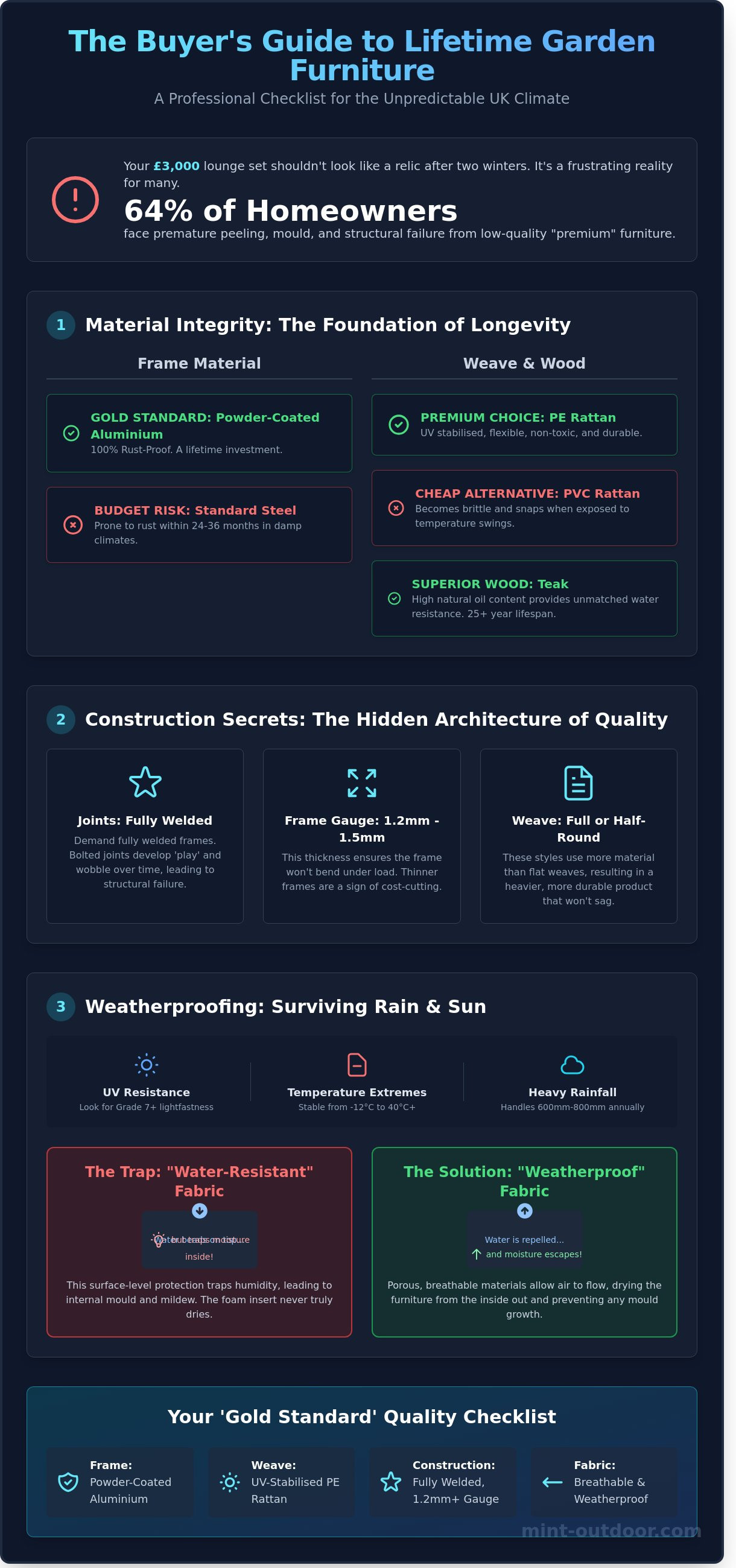
Your £3,000 outdoor lounge set shouldn't look like a relic after just two winters in the Home Counties. It's a frustrating reality that 64% of homeowners face when their "premium" rattan begins to peel or their cushions succumb to mould before the first summer bank holiday. You deserve a space that functions as a high-end extension of your interior, requiring nothing more than a quick wipe down to be guest-ready.
Finding the best garden furniture south east england has to offer involves more than just picking a style; it's about engineering against the British climate. We've developed a rigorous 5-part checklist to help you identify genuine quality, from the chemical makeup of synthetic weaves to the density of high-performance foam inserts. You'll gain the confidence to invest in pieces that stay structural and stylish for over 10 years. This guide breaks down the essential material benchmarks, maintenance shortcuts, and sourcing secrets you need for a truly permanent outdoor living solution.
Key Takeaways
- Identify the gold standard for rust prevention and learn why high-quality PE rattan is the essential choice for long-term material integrity.
- Master the technical difference between "water-resistant" and truly "weatherproof" fabrics to ensure your cushions survive the unpredictable British climate.
- Apply the "Traffic Flow" rule and ergonomic dimension checks to create a functional, comfortable outdoor layout that avoids common spatial mistakes.
- Secure the highest quality garden furniture south east england has to offer by using our professional checklist to evaluate durability and UV resistance.
- Implement expert maintenance and storage protocols to protect your investment and keep your premium furniture in showroom condition year-round.
Part 1: The Material Integrity Checklist for Garden Furniture in South East England
Sourcing premium garden furniture south east england requires a clinical focus on material longevity. The regional climate, which fluctuates between high humidity and sharp coastal winds, acts as a catalyst for oxidation and decay. Your first priority is the core frame material. Powder-coated aluminium is the undisputed gold standard for rust prevention. Unlike steel, aluminium doesn't produce iron oxide, meaning it won't rust even if the protective coating is chipped. It's a lifetime investment that justifies a higher price point. Steel remains a budget-friendly choice, but it's prone to internal corrosion within 24 to 36 months in damp British conditions.
The distinction between high-quality PE (Polyethylene) and cheap PVC alternatives is equally critical. Premium sets use PE rattan because it's non-toxic, 100% recyclable, and stays flexible under stress. PVC rattan is often loaded with fillers that make it brittle. When exposed to the temperature swings common in counties like Kent or Surrey, PVC eventually snaps. Wood selection requires similar scrutiny. Teak is the superior choice due to its exceptionally high natural oil content and tight grain density. While acacia is a respectable hardwood, it lacks the same level of built-in moisture resistance and requires more frequent maintenance to prevent the grain from lifting.
The Rattan Weave Test
Don't just look at the colour; examine the weave's composition. Premium garden furniture south east england must feature UV stabilisers within the synthetic resin to prevent fading and structural failure. You should look for full-round or half-round weaves. These styles use more material than thin flat strips, resulting in a heavier, more durable product that won't sag. Ensure the weave is tight and consistent. There shouldn't be loose ends visible at the base or corners, as these are the primary points where unraveling begins.
Frame Construction Secrets
The strength of a sofa set lies in its hidden architecture. Verify that frames are fully welded rather than just bolted together. Bolted frames develop "play" over time, leading to wobbles and structural weakness. Premium manufacturing standards dictate a metal tubing thickness of 1.2mm to 1.5mm gauge. This thickness ensures the frame won't bend under the weight of multiple users. You can explore our range of rattan garden all-weather sofa sets for examples of this high-spec framing. A heavy, fully welded frame is a hallmark of a set designed to stay outdoors year-round without losing its structural integrity.
- Aluminium: 100% rust-proof, lightweight, and requires zero maintenance.
- Steel: Heavy and cheap, but requires constant vigilance against rust.
- PE Rattan: Weather-resistant and durable against UV exposure.
- Teak: Naturally waterproof with a 25-year plus lifespan if treated correctly.
Part 2: The Durability and Weatherproofing Checklist
Durability isn't a luxury; it's a strategic requirement for the volatile British climate. When sourcing garden furniture south east england, you're dealing with specific environmental pressures, from higher-than-average UV levels to salt-laden air along the coast. High-quality sets must remain stable through temperature swings ranging from -12°C in winter to record peaks of 40.3°C. If a piece isn't engineered for these extremes, it won't last three seasons.
UV resistance is your first line of defence. Standard plastics and cheap dyes degrade within 12 months, leading to brittle frames and bleached fabrics. Look for materials with a lightfastness rating of Grade 7 or higher. This ensures the aesthetic integrity of your investment remains intact despite 1,600 to 2,000 hours of annual sunshine recorded in regions like Kent and East Sussex. UV-stabilised resin is the primary defence against sun damage in the UK.
Hydrophobic properties determine how your furniture handles the 600mm to 800mm of annual rainfall typical for the South East. True "weatherproof" furniture doesn't just repel water; it manages moisture through advanced breathability. While water-resistant fabrics might cause rain to bead on the surface, they often trap humidity underneath, leading to internal mould. Expertly engineered sets use porous structures that allow airflow to dry the material from the inside out.
The anti-corrosion audit is vital for coastal or damp environments. Salt air accelerates oxidation in low-grade steel. Premium sets utilise powder-coated aluminium frames. This material creates a natural oxide layer that prevents deep-seated rust, ensuring the structural skeleton remains sound for over 15 years.
Fabric Technology and Foam Density
Precision matters in textile selection. Look for solution-dyed acrylic fabrics that hold colour at the fibre level for maximum longevity. This process ensures the pigment is part of the yarn itself, not just a surface coating. Pair this with quick-dry foam technology. This open-cell structure allows water to permeate and exit the cushion rapidly rather than soaking into the core like a sponge. If your current set is failing to stay dry, consider our replacement garden furniture cushion sets to restore comfort and performance.
Structural Resilience to Wind and Rain
Weight provides stability. A premium chair should weigh at least 12kg to 15kg to prevent it from becoming a projectile during 50mph gusts. However, it must remain manoeuvrable. Check the base for non-slip, protective feet or nylon glides. These components prevent floor scratching on expensive stone patios and stop moisture wicking up into the furniture legs. For total peace of mind during the harshest winter months, you can shield your investment with our protective garden furniture covers.
Part 3: The Comfort and Ergonomics Checklist
Visual appeal sells, but ergonomics determine how often you'll actually use your investment. When sourcing garden furniture south east england residents often prioritise aesthetics for their patio, yet the real value lies in the hidden dimensions. Standard seat depths of 50cm frequently fail users who are taller or shorter than the 175cm average. A premium set offers depths closer to 60cm or 70cm, allowing for a true lounge posture that supports the thighs without cutting off circulation.
Back height is equally critical. Low-profile furniture looks sleek in a showroom, but it provides zero neck support for long afternoons. Look for backrests that reach at least 45cm from the seat base. Cushion loft provides the final layer of this ergonomic puzzle. Demand high-density foam with a minimum weight of 25kg per cubic metre. This density ensures the cushion retains its shape and prevents you from "sinking to the frame" after just 20 minutes of use. Cheaper fiber-filled alternatives often lose 40% of their loft within the first season.
Armrests must facilitate natural relaxation. If they're too high, your shoulders will hunch; too low, and you'll lean awkwardly. A height of 22cm above the seat cushion is the sweet spot for 95% of adults. The rise of casual dining sets has transformed how we use garden furniture south east england wide. By setting table heights at 68cm rather than the traditional 75cm, these pieces bridge the gap between a formal meal and a relaxed coffee. It's a strategic choice for those who want one set to serve multiple purposes.
Testing the Lounge Experience
Don't just sit on the edge. Sit in the corner seat first. This junction is where structural weaknesses hide in mass-market sets. A quality frame will feel rigid even at its widest point. Check the angle of the backrest; a 15-degree tilt is the industry standard for optimal relaxation. You can view the Palma Grey Corner Rattan Set for a masterclass in ergonomic lounging that balances these specific dimensions perfectly.
Dining Comfort Standards
Legroom is non-negotiable. Ensure there's at least 30cm of clearance between the chair seat and the underside of the table. Without this, your guests will feel cramped and uncomfortable during long meals. For tables with parasol holes, check for a double-ring stability system or a weighted base guide. This prevents a 3-metre parasol from wobbling or damaging the table top during a 15mph breeze, which is a common occurrence across the exposed gardens of the South East.
Part 4: The Space Planning and Configuration Checklist
Precision is the hallmark of a premium outdoor space. High-end garden design requires more than just picking a set you like; it demands a strategic approach to spatial dynamics. In the South East, where property values are high and garden space is a premium asset, every square centimetre must perform. Poor planning leads to "dead zones" or cramped walkways that ruin the relaxation experience.
The "Traffic Flow" rule is your most vital metric. Always leave between 75cm and 100cm of clearance around dining sets and sofas. A 75cm gap allows a single person to walk past comfortably. If you plan on hosting large gatherings, 100cm ensures guests can move behind seated diners without causing a bottleneck. This measurement is non-negotiable for maintaining a professional, airy atmosphere.
Your orientation strategy should follow the sun. In Kent and Surrey, south-facing gardens enjoy maximum light, but they also require shaded retreat areas to remain usable during July heatwaves. Track the sun’s path from 10:00 to 18:00 before deciding where to bolt down your furniture. Align your main seating towards your garden’s primary focal point, whether that is a manicured lawn, a water feature, or a scenic view of the North Downs. This creates a natural "destination" within your property.
Zoning turns a flat patio into a multi-functional outdoor suite. Use outdoor rugs and furniture placement to define distinct "rooms" without building walls. A sofa set placed on a weather-resistant rug immediately signals a lounge zone, while a dining table positioned near the kitchen access points creates a logical transition for hosting. This structured approach is why garden furniture south east england homeowners often prefer modular configurations over fixed sets.
Maximising Small and Large Patios
For compact urban terraces, focus on scale. Overcrowding a small area makes it feel smaller. Instead, look at 4-5 seater garden sofa sets that provide luxury seating without swallowing the entire floor plan. For expansive country estates, you need furniture that commands the space. Use 6-9 seater garden sofa sets to fill larger terraces proportionally, ensuring the furniture doesn't look lost in the landscape. Modular sets allow for future-proofing your garden layout because you can reconfigure individual sections as your family grows or your entertaining needs change.
The Aesthetic Harmony Check
Premium outdoor design is an extension of your interior architecture. Coordinate your furniture colours with your home’s exterior brickwork or window frames to create a seamless visual transition. If you have modern anthracite grey window frames, choosing garden furniture south east england in matching powder-coated aluminium creates a cohesive, high-end look. Use accessories like parasols and scatter cushions to add pops of seasonal colour and texture, allowing you to refresh the look without replacing the entire set.
Ready to transform your terrace with a layout that works? Explore our modular corner sofa collections to find the perfect configuration for your space.
Part 5: The Maintenance and Protection Checklist
Investing in high-end outdoor living requires more than a one-time purchase. It demands a strategy. To keep your garden furniture south east england looking showroom-fresh, you need a rigorous maintenance schedule. Neglecting this leads to a 30% faster degradation of materials like synthetic rattan and powder-coated aluminium. Consistency is the difference between a set that lasts three seasons and one that lasts a decade.
The annual clean is your first line of defence. Start by clearing surface debris with a soft brush. Mix 50ml of mild detergent with 5 litres of warm water to create a gentle cleaning solution. Scrub the surfaces lightly, focusing on the gaps in the weave where dust accumulates. Rinse with a low-pressure garden hose rather than a power washer. High-pressure jets can strip protective coatings and fray synthetic fibres. Always allow the frames to air dry completely before applying any covers.
Winterproofing Your Investment
Moving furniture into a dry shed or garage is the gold standard for winter storage. If indoor space isn't available, you must invest in heavy-duty protective garden furniture covers with integrated air vents. These vents are critical because they prevent the condensation that leads to mildew and metal oxidation. Clean every surface before covering to ensure mould doesn't have a food source during the damp months. If your furniture stays on grass, elevate the legs by 2cm to 3cm using spacers to stop constant moisture contact and rot.
The Long-Term Care Routine
Check your furniture every 12 months for structural integrity. Tighten any bolts or fixings that have loosened due to temperature fluctuations. Use a soft brush on rattan weaves to prevent abrasive dust from wearing down the synthetic fibres. This simple 15-minute task can extend the life of your set by at least 5 years. For aluminium frames, a quick wipe with a damp cloth every few months prevents salt and grit from pitting the finish.
Cushion care follows the "breathability" rule. You should never store soft furnishings in airtight plastic bags. Trapped moisture is the primary cause of mould growth in 85% of reported cases. Use breathable fabric storage bags instead and keep them in a cool, dry indoor space from October through March. Even "all-weather" cushions benefit from being brought inside during the peak of a British winter to maintain their loft and colour.
Warranty verification is your final safety net. A premium guarantee should offer a minimum of 3 years of structural coverage. Look for specific mentions of UV resistance and rust-proofing in the terms. Ensure the manufacturer provides a clear contact process for claims. A vague warranty often indicates a lower-tier product that won't withstand the variable climate. Your garden furniture south east england should be backed by a brand that stands by its durability with concrete figures and transparent terms.
Elevate Your Outdoor Living Strategy Today
Securing a premium outdoor space demands more than just aesthetic appeal; it requires a strategic focus on material engineering. Since 2014, we've set the benchmark for quality by providing high-grade powder-coated aluminium frames as a standard across our entire range. This specific engineering choice ensures your investment remains rust-free and structurally sound regardless of the unpredictable British weather. By prioritising specialists in all-weather PE rattan and luxury fabrics, you're not just buying a seating arrangement; you're investing in a durable extension of your luxury lifestyle.
When sourcing the finest garden furniture south east england offers, remember that material integrity and ergonomic design are the twin pillars of long-term value. Our team focuses on these exact details to ensure every piece meets the highest durability standards. It's time to transform your terrace or lawn into a sophisticated, high-performance environment that delivers results year after year. Your garden deserves a professional touch that balances comfort with uncompromising resilience.
Discover our premium range of garden furniture sets with nationwide delivery
Frequently Asked Questions
Is rattan garden furniture actually waterproof in the UK?
High-quality synthetic PE rattan is 100% waterproof and withstands the 800mm of average annual rainfall common in South East England. It won't absorb moisture or rot like natural materials. You must ensure the internal frame is powder-coated aluminium rather than steel to prevent rust. While the weave survives the rain, standard cushions require separate storage to avoid waterlogging and internal mould growth.
How do I choose between metal and rattan garden furniture?
Choose aluminium for a sleek, zero-maintenance finish that lasts 15 years or more. It's lightweight and entirely rust-proof. Select PE rattan if you prefer a classic, textured aesthetic for your garden furniture south east england setup. High-end rattan sets provide a softer feel but require slightly more cleaning to remove debris from the weave. Both options offer excellent durability in the British climate.
Can I leave my garden furniture cushions outside overnight?
You shouldn't leave standard cushions out overnight as morning dew and fluctuating humidity levels cause mould growth within 48 hours. Only "all-weather" cushions with porous foam and UV-resistant fabrics stay out. Most premium sets in the UK use 100% polyester covers that require dry storage to maintain their structural integrity and £500+ value. Consistent exposure to damp nights eventually degrades even the best fabrics.
What is the best way to clean my outdoor sofa set?
Clean your set using a solution of warm water and mild pH-neutral soap with a soft-bristled brush. This removes 95% of surface dirt without damaging the UV stabilisers in the material. Never use a pressure washer exceeding 1500 PSI. High pressure strips the protective coating from metal and splinters the synthetic weave. An annual deep clean keeps your investment looking fresh for over a decade.
How much space do I need for a 6-seater garden dining set?
You need a minimum footprint of 3 metres by 4.5 metres for a standard 6-seater rectangular set. This allows for the 1.5m table width plus 75cm of clearance on all sides for guests to move chairs comfortably. Always measure your patio twice. A 10% margin of error in space planning often leads to cramped, unusable outdoor living areas that restrict movement and airflow.
Do I really need a furniture cover if my set is "all-weather"?
Yes, a breathable cover is essential to protect your investment from bird droppings, tree sap, and UV degradation. Using a cover reduces your annual maintenance time by 70%. It also extends the lifespan of your garden furniture south east england by approximately 3 to 5 years. Ensure the cover is secured with heavy-duty toggles to withstand 40mph wind gusts during winter storms.
How long should a premium garden furniture set last?
A premium set should remain functional and aesthetically pleasing for 10 to 20 years. Quality manufacturers offer 10-year structural warranties as standard. Cheaper alternatives often fail within 24 months due to brittle plastic or rusting steel frames. Investing £2,000 today prevents the need for a total replacement every 3 seasons. Quality materials like 1.5mm gauge aluminium ensure your furniture survives the British elements.
What is the difference between PE rattan and PVC rattan?
PE (Polyethylene) is a high-grade, recyclable plastic that remains flexible and UV-resistant for over 10 years. PVC (Polyvinyl Chloride) is a cheaper, brittle alternative that cracks after 12 months of sun exposure. PE rattan withstands temperature swings from -20°C to 40°C. PVC often emits toxic fumes when heated and lacks the tensile strength required for luxury furniture. Always check the material specifications before purchasing.